“A floating fortress, an analog resistance, a world ruled by digital eyes.” Aurora Citadel is a speculative surveillance game whose city builds itself. Rather than hand-authoring one level, we authored a generator: ten hand-modeled FBX modules, tagged with edge sockets, fed to a Wave Function Collapse solver that lays out a different navigable ruin every run — then patrolled by behavior-tree AI agents. Built in Unreal Engine 5.4 for CMU’s 62-706 Generative System Design, Spring 2025.

What it is
Aurora Citadel is set in a post-catastrophic Nordic future. In the game’s fiction, a quantum-fusion accident irradiates Finland’s southern coast, and an authoritarian Nordic Federation deploys an all-seeing AI surveillance network from a levitating brutalist fortress — the Aurora Citadel. Semi-autonomous agents patrol the devastated cities below, tracking motion and executing directives; the player moves through the ruins between analog resistance and algorithmic control. The premise is the design brief: a city built for surveillance, whose spatial logic is itself procedurally generated so that no two playthroughs share the same map.
The technical thesis of the class was generative systems, not generative content one-off. So the deliverable is not a level — it is the machine that produces levels. You author a vocabulary of tiles plus the rules for how they may connect, and the solver produces an endless family of maps that all obey those rules while never repeating.
The problem
Modular level generation has a standard failure mode: stitch tiles together by random placement and you get roads that dead-end into walls, buildings that clip through streets, and layouts with no coherent circulation. The interesting constraint is legibility — a generated city has to read as a city, with continuous roads, plausible blocks, and navigable space for the patrol AI to path through.
That framing is where the two assigned readings come in. Served and Servant Spaces (Lucy Lethbridge, The Architectural Review, 2013) takes its title from Louis Kahn’s distinction between served spaces (primary program) and servant spaces (the circulation and infrastructure that support them). The Shadow of Information (Perspecta 53: Onus, Yale School of Architecture, 2020) frames architecture through information and observation. Together they gave the module system a rule basis: some tiles are served (the building blocks — towers, ruins, program), others are servant (the roads and open ground that connect and surveil them). The adjacency grammar encodes that split — a road socket must meet a road socket, so circulation stays continuous and the surveilled streets remain coherent.
Architecture
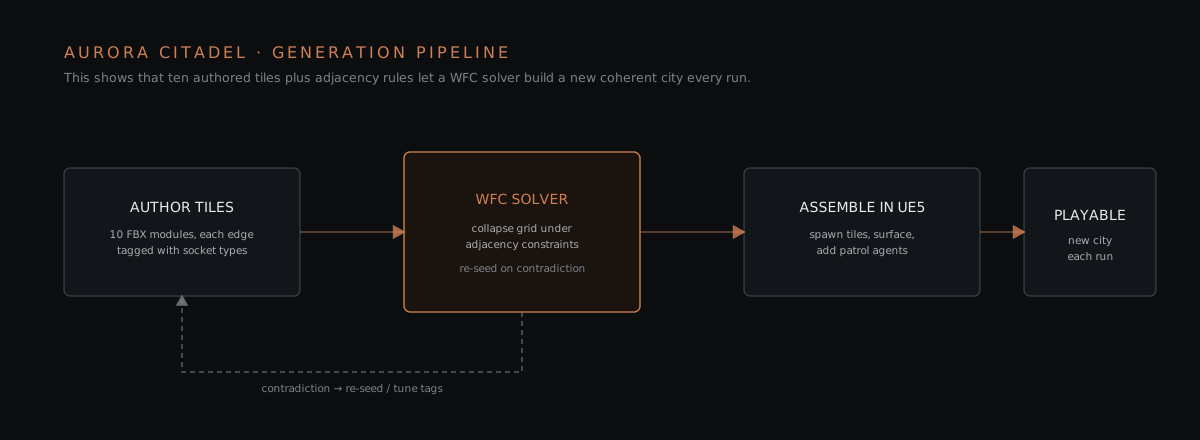
The pipeline has three stages: author the tile vocabulary, solve the grid, assemble the world.
1 — Author the vocabulary
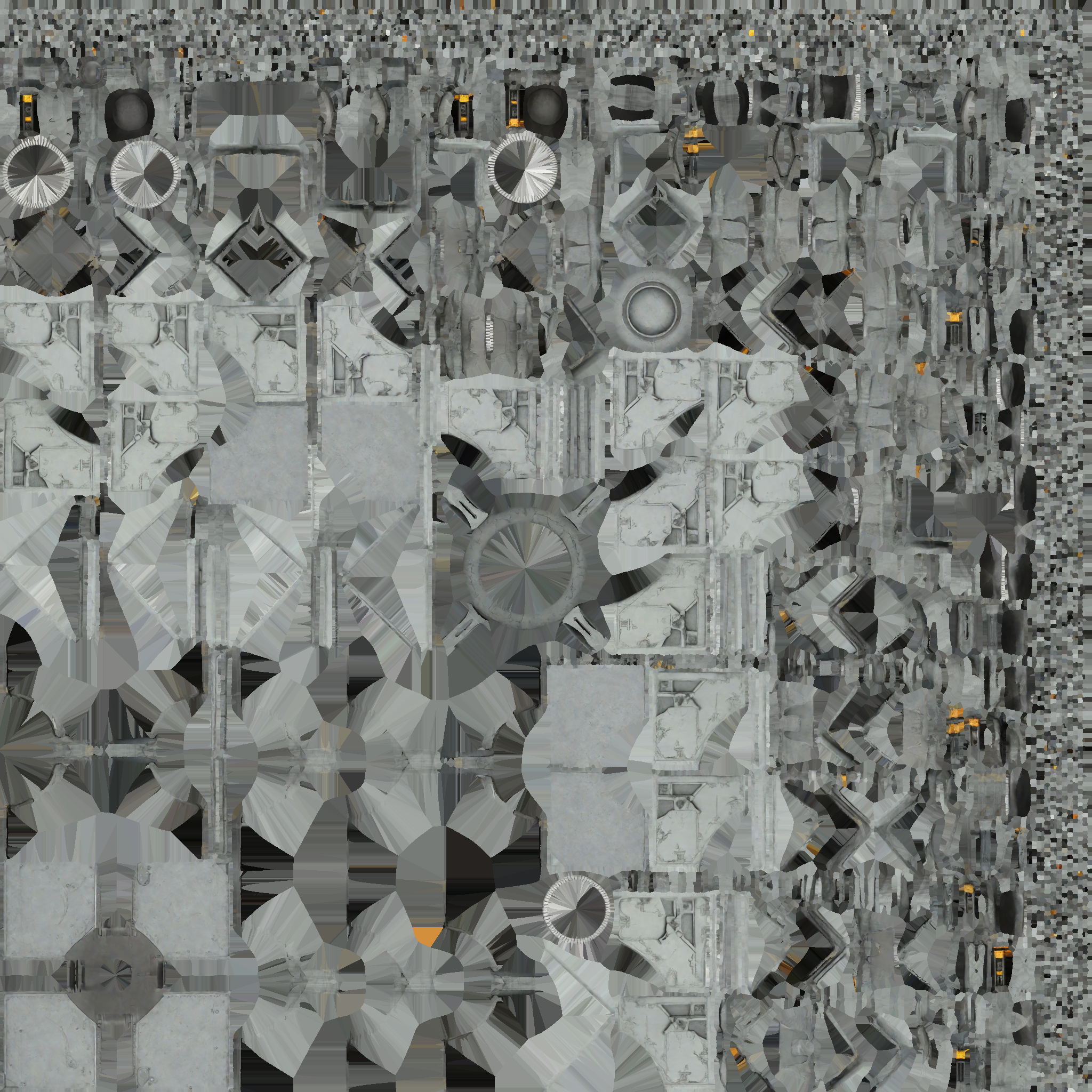
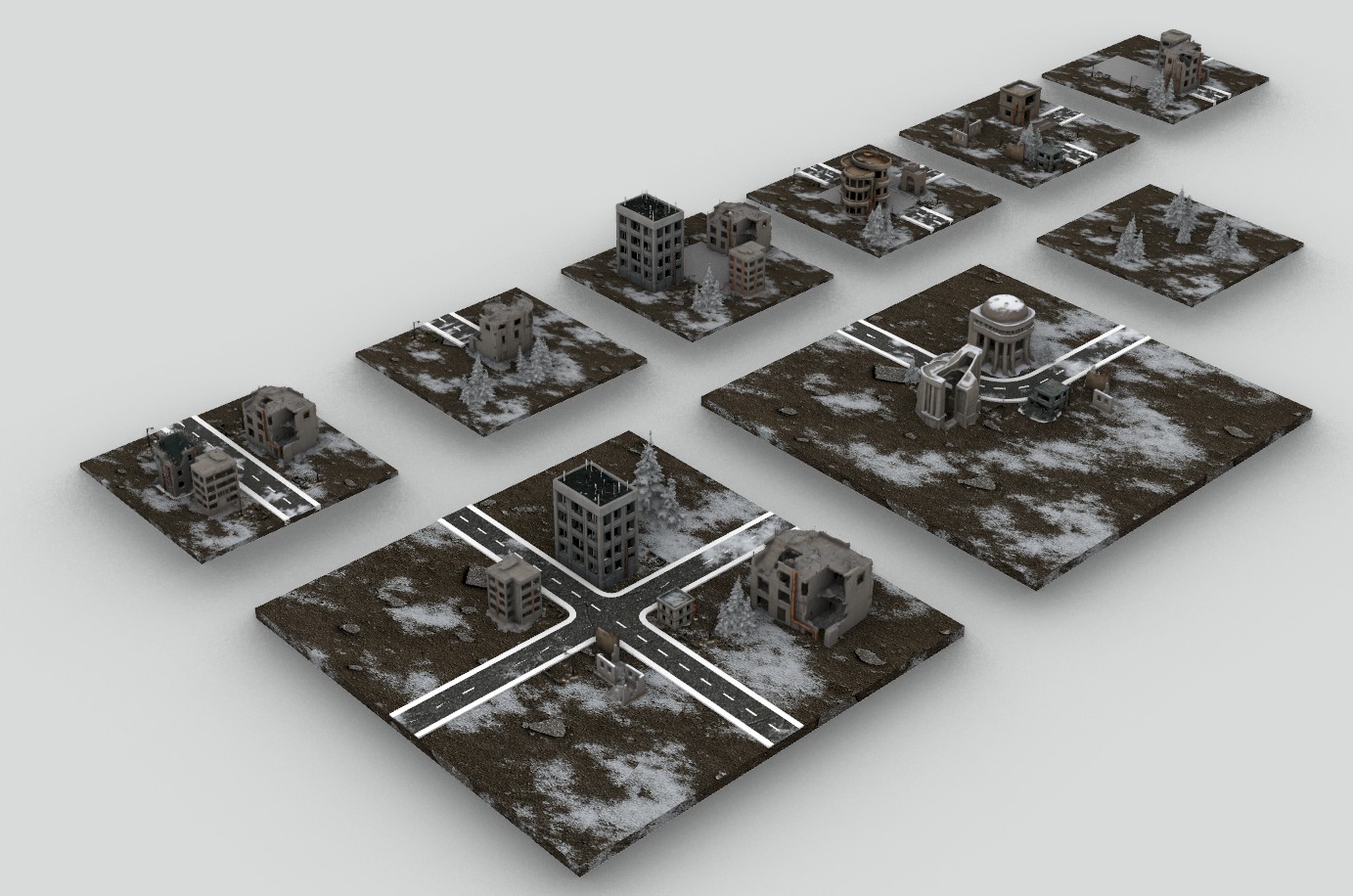
The base geometry is a library of ten hand-modeled FBX modules (24–61 MB each): corner, cross, linear, empty, modulea, moduleb, 2socketsblack, 2socketsredblack, topblack, and topred. Each is a chunk of ruined Nordic city — a road segment, a building cluster, a rubble field, a snow-covered lot.
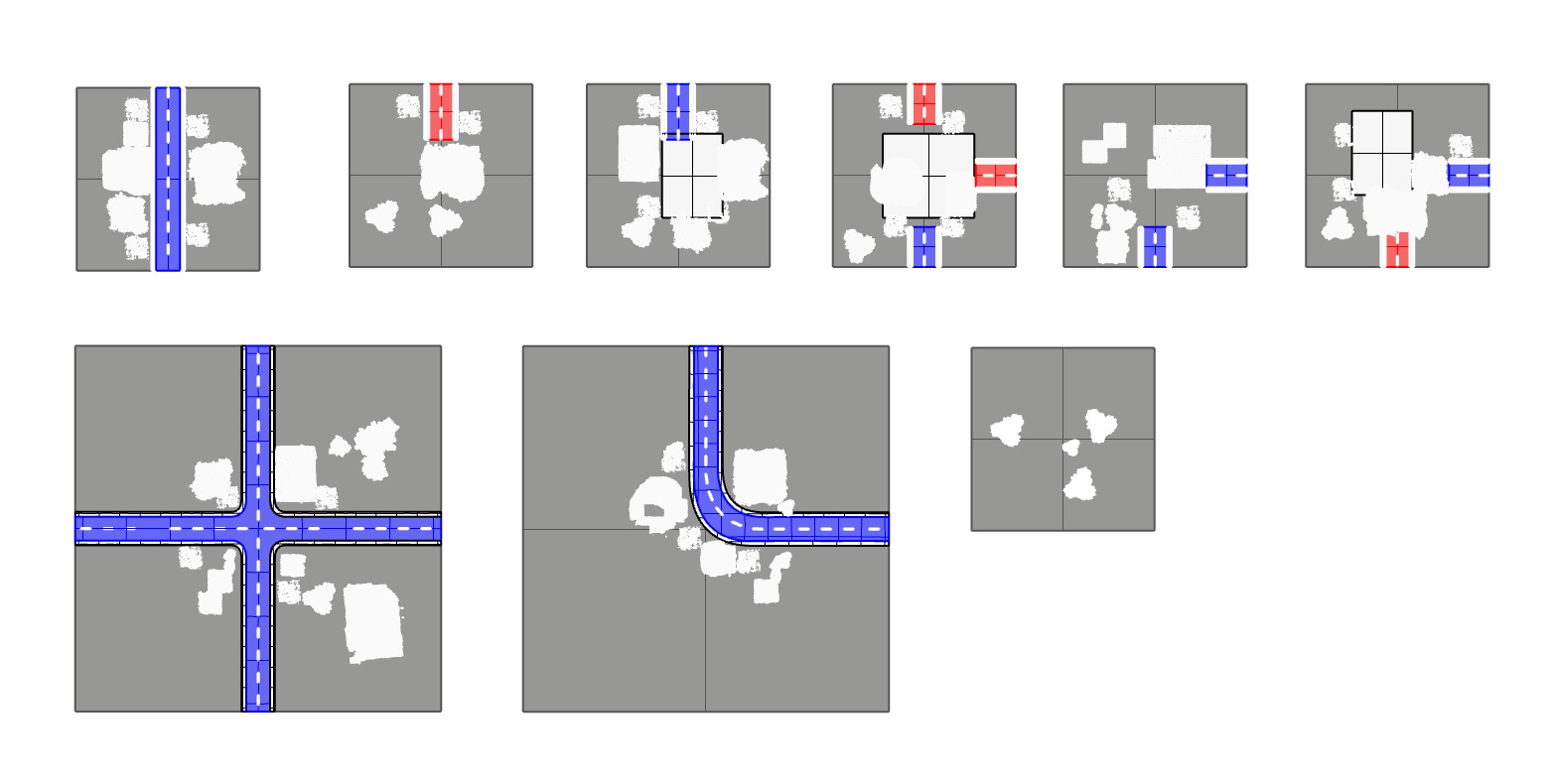
Each module is wrapped in a UE5 Tile2D asset (UWFCTileAsset2D), which is what the solver actually reasons over. The custom tile set (under the project’s WFCPlugin/2D/Tiles/, with the imported meshes and AI textures in Our_Tiles/) includes Tile2D_Corner, Tile2D_Cross, Tile2D_Straight, Tile2D_End, Tile2D_Empty, Tile2D_RedEnd, Tile2D_RedIntersect, Tile2D_RedIntersectLg, and the large-corner CornerLgA / CornerLgB pieces. A tile asset stores which actor to spawn, and — crucially — edge-socket tags on each of its four faces.
The socket grammar is visible in the tile plan view: gray tiles carry colored road stubs on their edges (blue road and red road), plus wall and open-ground edges. The tag on an edge declares what may abut it. This is the served/servant split made mechanical — road edges only meet road edges, so streets stay continuous; building edges sit against ground; the two “colors” of road (blue / red) form two distinct circulation networks that don’t cross-contaminate.
2 — Solve the grid
Generation uses WFCPlugin 5.4 (by Bohdon Sayre), an Unreal plugin implementing the Wave Function Collapse family of constraint-propagation algorithms. Its object model composes cleanly:
| Piece | Role |
|---|---|
UWFCModel / UWFCTileSet | the full tile vocabulary, with rotation permutations auto-expanded |
UWFCGridConfig | grid class (2D here) and dimensions |
UWFCConstraint[] | the rules — edge/adjacency (matching sockets), boundary, and tag-count caps |
UWFCCellSelector | picks which cell to collapse next — entropy-based |
The solve loop is the standard WFC cycle:
seed the grid — every cell holds all possible tiles
while any cell is unresolved:
    propagate  — for each cell, prune tiles whose sockets
                 can't match a surviving neighbor
    select     — choose the lowest-entropy cell
                 (fewest remaining options — most likely to conflict)
    collapse   — commit that cell to a single tile
→ all cells resolved and adjacency-valid, or contradiction
The plugin has no backtracking: if propagation drives a cell to zero possibilities, the generator hits a contradiction and errors out. The practical recovery — and a real part of the work — is to re-seed and to tune the tile tags and counts so contradictions become rare. Fewer over-constrained edges, sensible caps on scarce tiles, and rotation permutations all widen the solution space so a run is likely to complete. This tuning is the difference between a generator that usually produces a coherent city and one that usually deadlocks.
3 — Assemble and play
At runtime a WFCGeneratorComponent runs the generator on BeginPlay and, as each cell resolves, spawns the corresponding tile actor at its grid coordinate — dropping the FBX module into the world. On top of the assembled geometry:
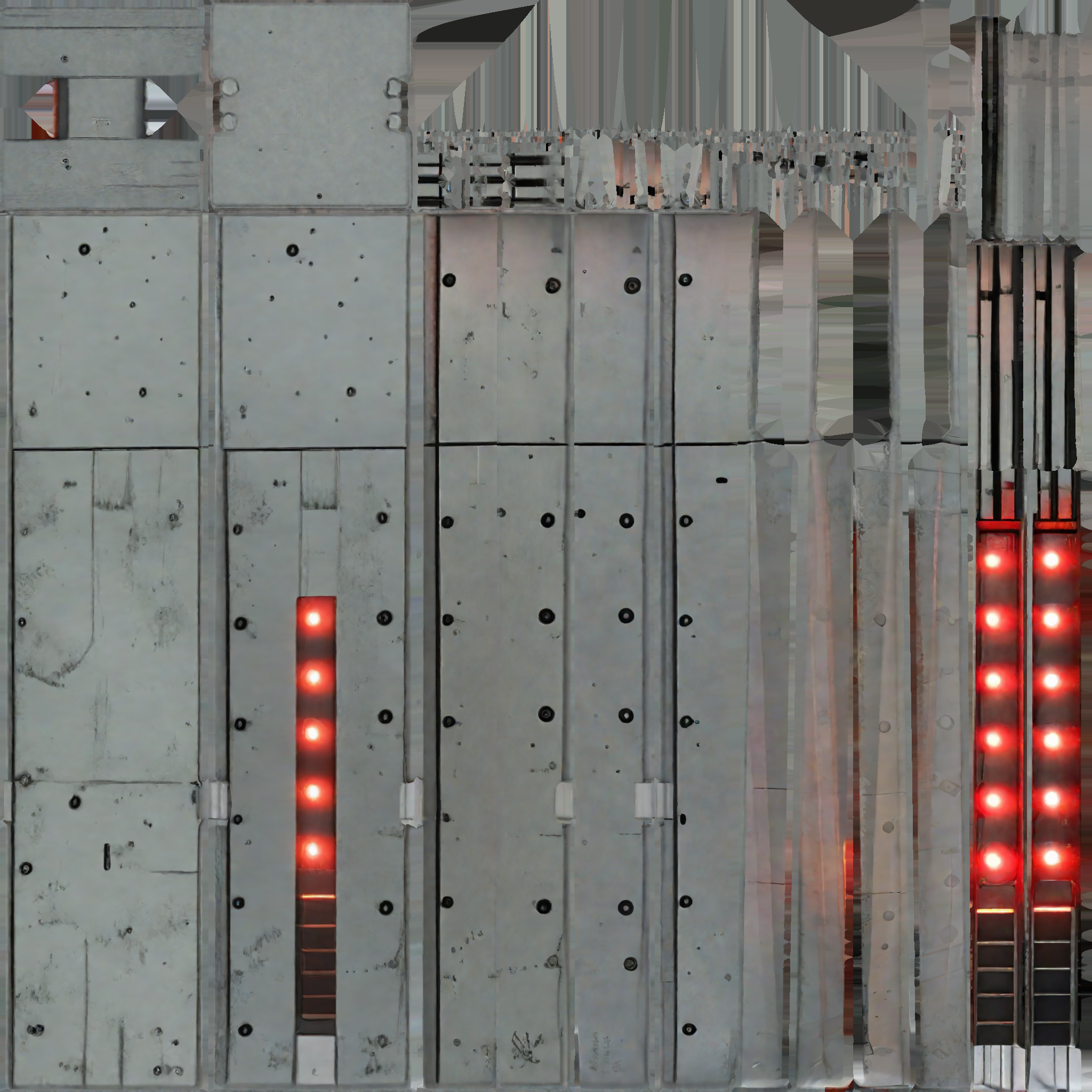
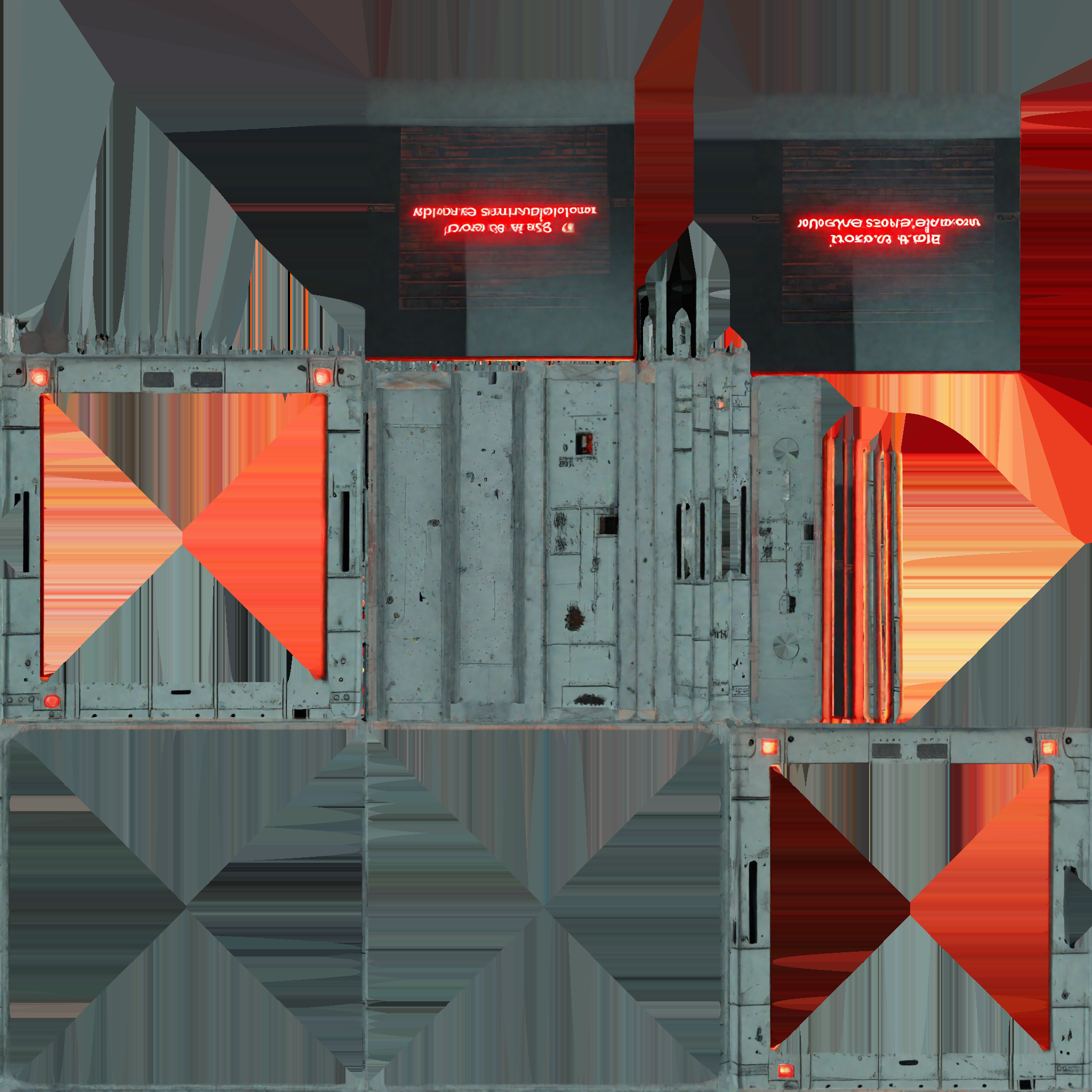
- Surfacing. Modules are dressed in AI-generated brutalist textures — weathered concrete panels with red LED strips (
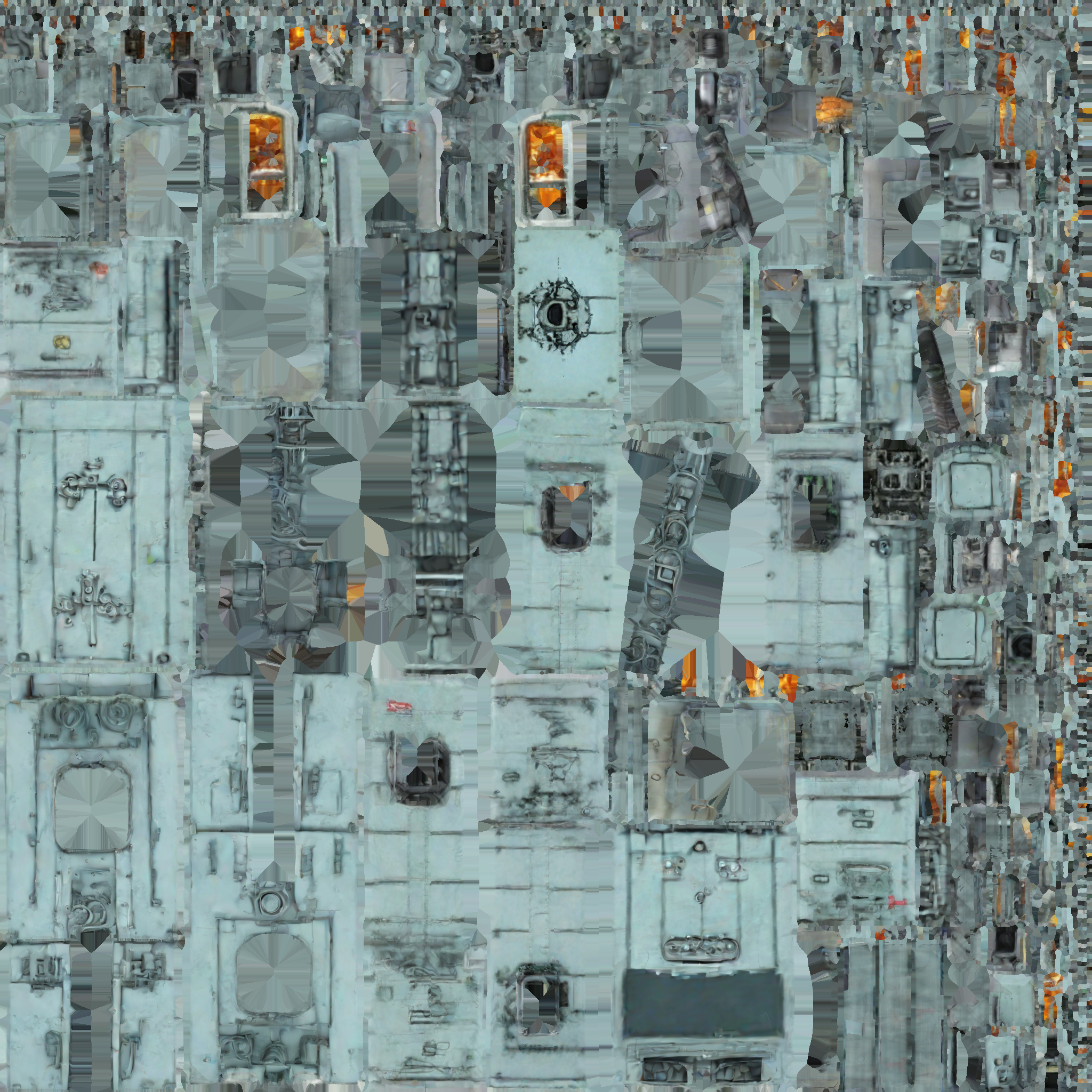
A_hypermodern_brutal,A_floating_ultra_r, and others), matching the surveillance-state palette — plus PolyHaven and Megascans PBR materials (Fresh Windswept Snow, Rocky Ground) blended through an auto-material for the snowy ground. - Patrol agents. The surveillance fiction is enforced by NPCs driven by behavior trees and EQS (Environment Query System): patrol-path following, random-location wandering, and a detect-and-chase alert state. Agent meshes (cube / drone / display units) also use AI-generated textures. The agents path through whatever street layout the solver produced that run.
- Play surface. The game ships as a top-down build with a minimap driven by a render-target camera, so the player reads the generated block structure from above as they evade the sensor network.
The result: same ten-module vocabulary, a new coherent ruined city every time you launch.
Concrete decisions
- 2D grid, not 3D. WFCPlugin supports both. A 2D grid of city blocks (rather than a 3D voxel solve) keeps the problem tractable and maps directly onto a top-down surveillance game — the plan is the play space.
- Sockets carry the meaning, not just geometry. By tagging edges with named connector types (road / wall / ground, split by color) rather than raw mesh silhouettes, the adjacency rules stay editable and the served/servant grammar is expressed in data, not baked into meshes.
- AI textures for a specific look, PBR scans for the ground. Generated textures gave the brutalist, red-lit surveillance aesthetic that no stock library carried; Megascans/PolyHaven handled the physically-grounded snow and rock where realism mattered more than authored style.
- Re-seed over backtrack. Given the plugin’s no-backtracking limitation, effort went into constraint tuning to make contradictions unlikely, rather than trying to bolt on a backtracking solver.
My contribution
This was a team final project. My work was on the generative pipeline that makes the case study interesting: building the module set and wrapping the FBX geometry into edge-tagged tile assets, setting up the WFC tile/adjacency configuration (sockets, constraints, and the tuning that keeps the solver from deadlocking), and the AI-texture surfacing that gives the ruins their brutalist surveillance look. The served/servant grammar from the readings is the design idea I mapped onto the socket tags.
Outcomes
- Playable build — a packaged UE5 5.4 executable (
Aurora Citadel.exe) that generates a fresh city on launch and runs the patrol AI. - 5-minute demo video —
Game_Design_Final_Video_Demo.mp4(324 MB), the public-facing artifact. - Complete asset library — roughly 10 GB of modules, tile assets, AI + PBR textures, and UE5 project files.
- A working design-to-mechanics mapping — architectural theory (served/servant spaces, information/observation) translated into an executable adjacency grammar rather than left as framing.
Why it’s not on GitHub
Ten-plus GB of UE5 binaries plus a 323 MB video exceeds any reasonable git repo; Git LFS would help but was out of scope for a course deadline. The build and full asset set stay local — the demo video and the renders above are the public artifacts. There is no hosted playable build.
Links
- WFCPlugin — Bohdon Sayre — the UE5 Wave Function Collapse plugin used (v5.4)
- Wave Function Collapse — mxgmn — the original algorithm the plugin implements
- Readings:
/assets/aurora-citadel-gen-game/Served and Servant Spaces.pdf(Lethbridge, The Architectural Review, 2013) ·/assets/aurora-citadel-gen-game/The_Shadow_of_Information.pdf(Perspecta 53, Yale, 2020) - Local project:
W:\CMU_Academics\2025 Spring\62706 Gen Game\(Aurora Citadel build + Final_Submission_Citadel)
Related cards
An outlier in the portfolio — game / procedural rather than AI-tooling — which is the point: it shows the same systems-thinking (author the generator, not the artifact) applied to a game engine.