A generative-AI framework for simulating and visualizing the long-term aging of architectural façades. Unlike existing generative models that present idealized, pristine textures, this tool emphasizes realistic deterioration driven by environmental exposure.
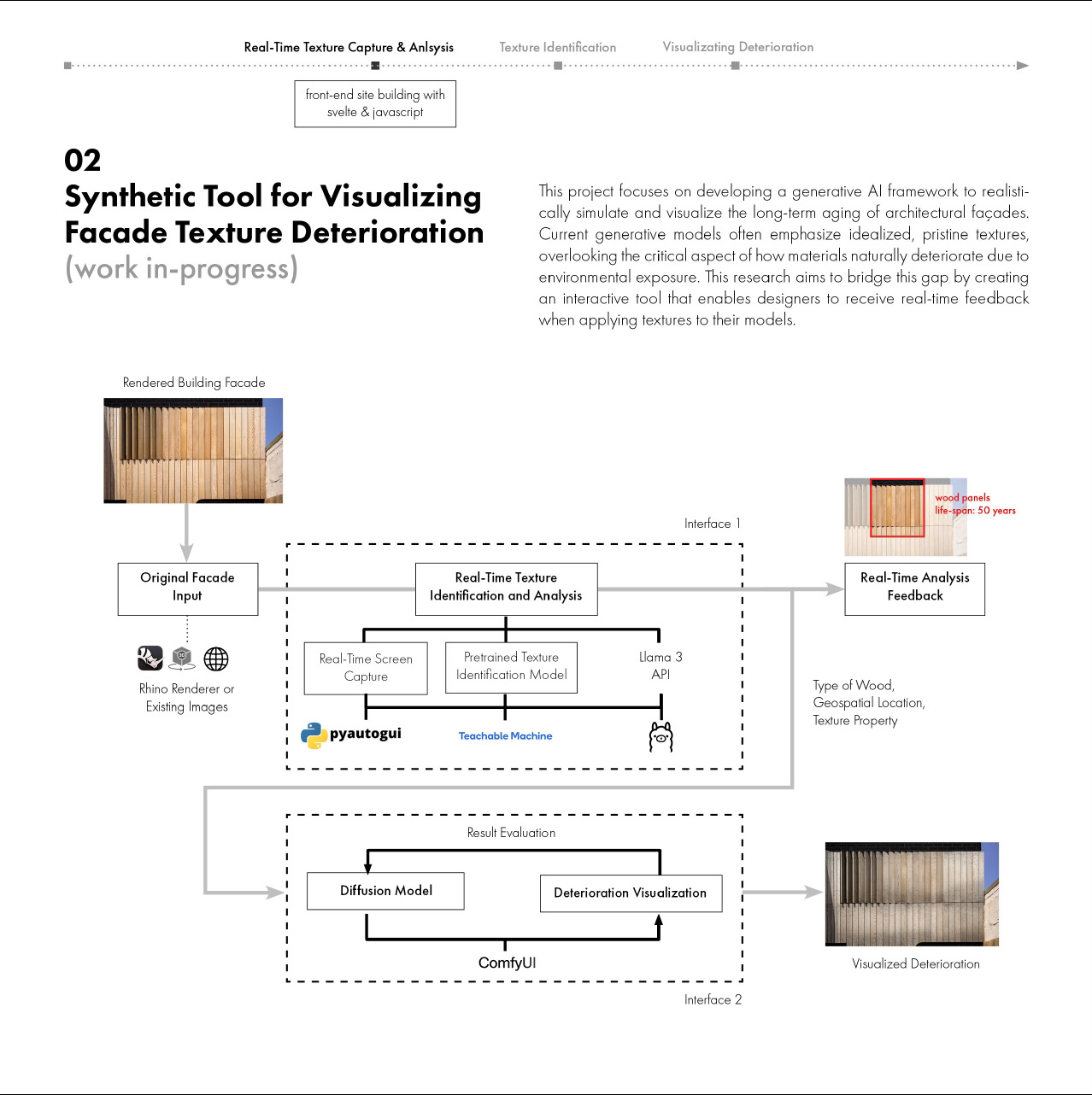
This project focuses on developing a generative-AI framework to realistically simulate and visualize the long-term aging of architectural façades. Unlike existing generative models — which often present idealized, pristine textures — this tool emphasizes the realistic deterioration of materials due to environmental exposure. By incorporating material-aging algorithms and data on climate conditions, the tool aims to bridge a critical gap in existing design processes: letting architects and designers anticipate how different materials weather over time.
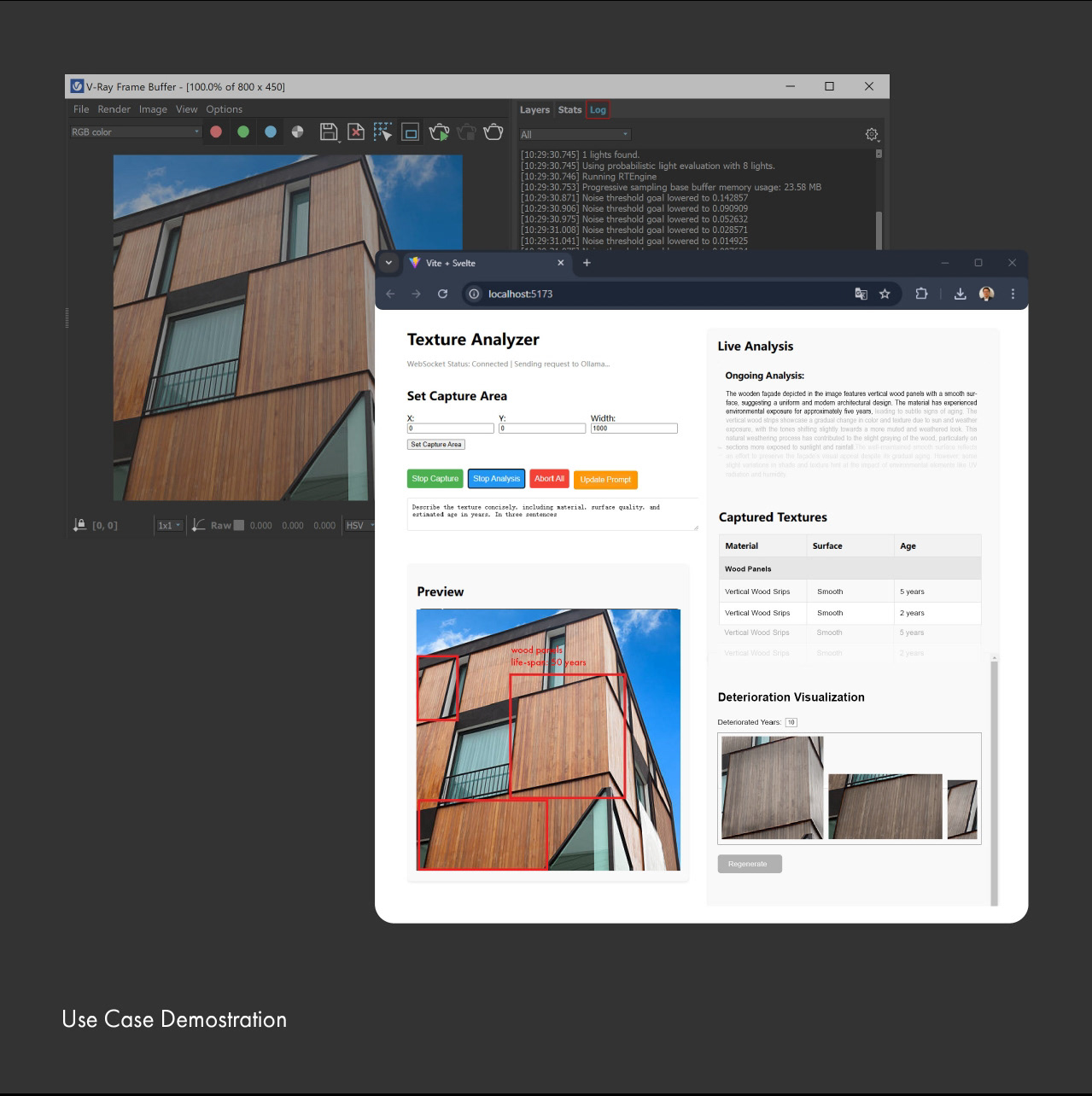
The tool is interactive. It provides real-time feedback to designers as they apply textures to their models. By adjusting environmental parameters — moisture, sunlight, pollution — users can visualize texture evolution dynamically and experiment with different aging scenarios. The feature enhances decision-making by offering a predictive understanding of material behavior, helping designers refine their choices and improve the long-term resilience and aesthetic quality of their projects.
(Project in progress.)
Approach
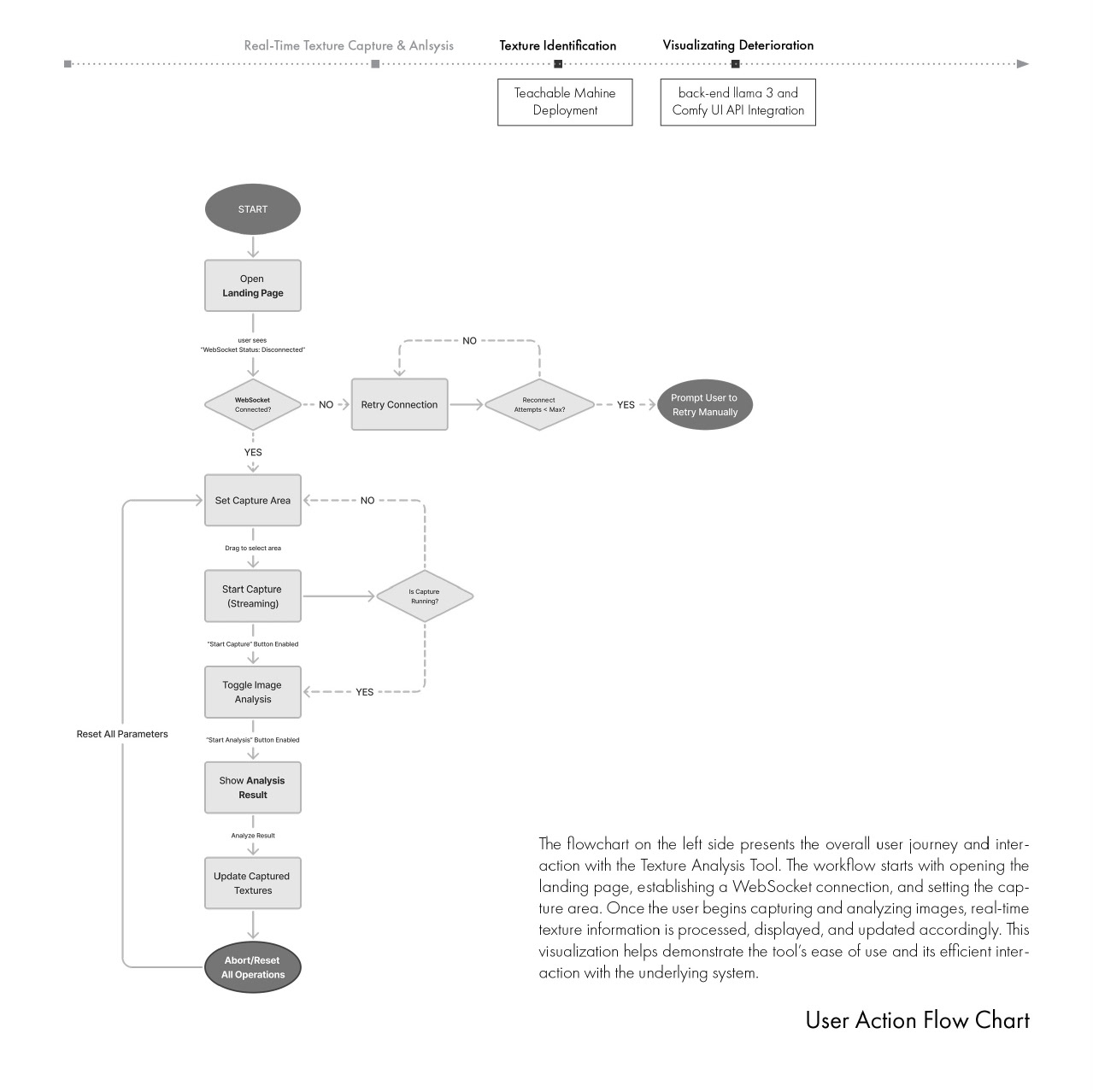
- Input — designer applies a texture to a 3D model in the web UI
- Environmental parameters — moisture, sunlight, pollution sliders
- Aging algorithm — generative model conditioned on environmental parameters + material class
- Data pipeline —
image_scraper.pypulls training images;image_labeling.py+ renaming for curation - Real-time feedback — designer sees predicted weathering dynamically as they adjust sliders
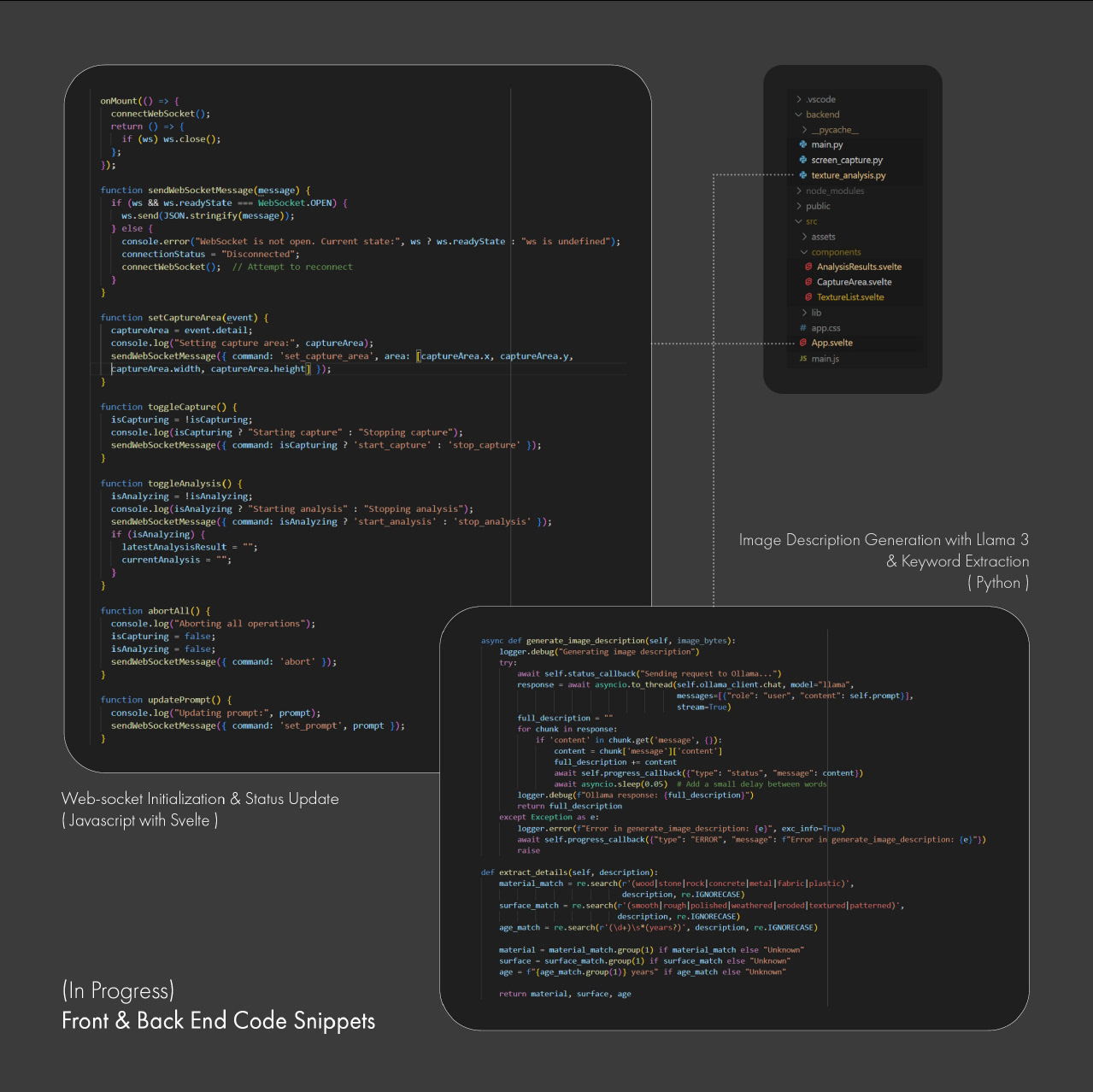
Stack: Svelte/Vite frontend + Python pipeline. ControlNet integrated for conditioned image generation.
Status note
Self-described as exploratory / in-progress. The idea stands — predictive material weathering as a design input rather than a post-hoc render effect — but the quality bar for a production-ready tool isn’t met yet. Card included as an attempt + idea worth revisiting in later thesis/material research.
Solo work for 48-736 Master Independent Study, Fall 2024. Full progress report at /assets/synthetic-texture-deterioration/progress-report.pdf.
Links
- GitHub repo: real-time-texture-analyzer
- Notion page
- Local:
W:\CMU_Academics\Fall 2024 CMU\Independent Study\new-texture-analyzer\ - Progress report (in vault):
/assets/synthetic-texture-deterioration/progress-report.pdf
Related cards
Part of the Fall 2024 “deterioration” cluster — three different lenses on the same theme:
- [[2024-Fall—a-game-of-deterioration]] — game-simulation lens
- [[2024-Fall—spectral-facades]] — installation lens